
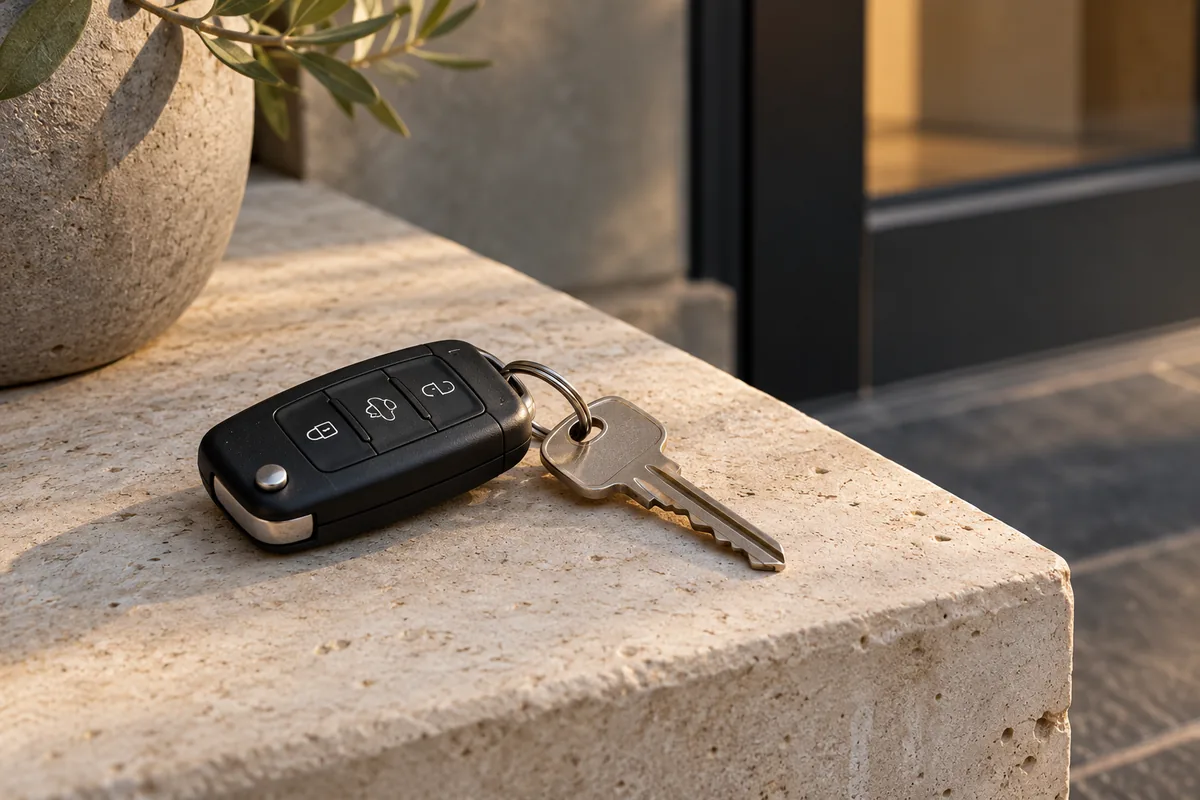
Decide which copies should work
A missing spare, a new tenancy or a business handover can leave you unsure who holds a usable copy. Start with the doors whose key access you want changed.
Rekeying suitable hardware changes its keying; whether it is the appropriate option depends on the lock and the wider arrangement. Do not assume every lock can be treated in the same way.
Check the door as well as the key
Rekeying is not a cure for every stiff handle or reluctant latch. Tell us about wear, damage or a key that already binds. Those observations may call for a repair assessment alongside the key question.
If the door itself is difficult to close, include that behavior too. A proposal should address the actual condition rather than only the reason you first called.
Explain any connection to other doors
If the same key also opens a lobby, storage space or another unit, say so before work is arranged. Bring in the person responsible for that arrangement.
For several private locks, ask whether a compatible key arrangement is possible, with suitability confirmed rather than assumed. The key handover guide helps organize these questions before a move or transfer.
Count the finished keys you need
Discuss the locks included, the keys to be supplied and who should receive them. Ask whether the estimate assumes the existing hardware is serviceable.
If assessment suggests a different option, review its reason and price before agreeing. After a key change, keep the new copies matched to the intended doors so old and new keys are not mixed up in the handover.