
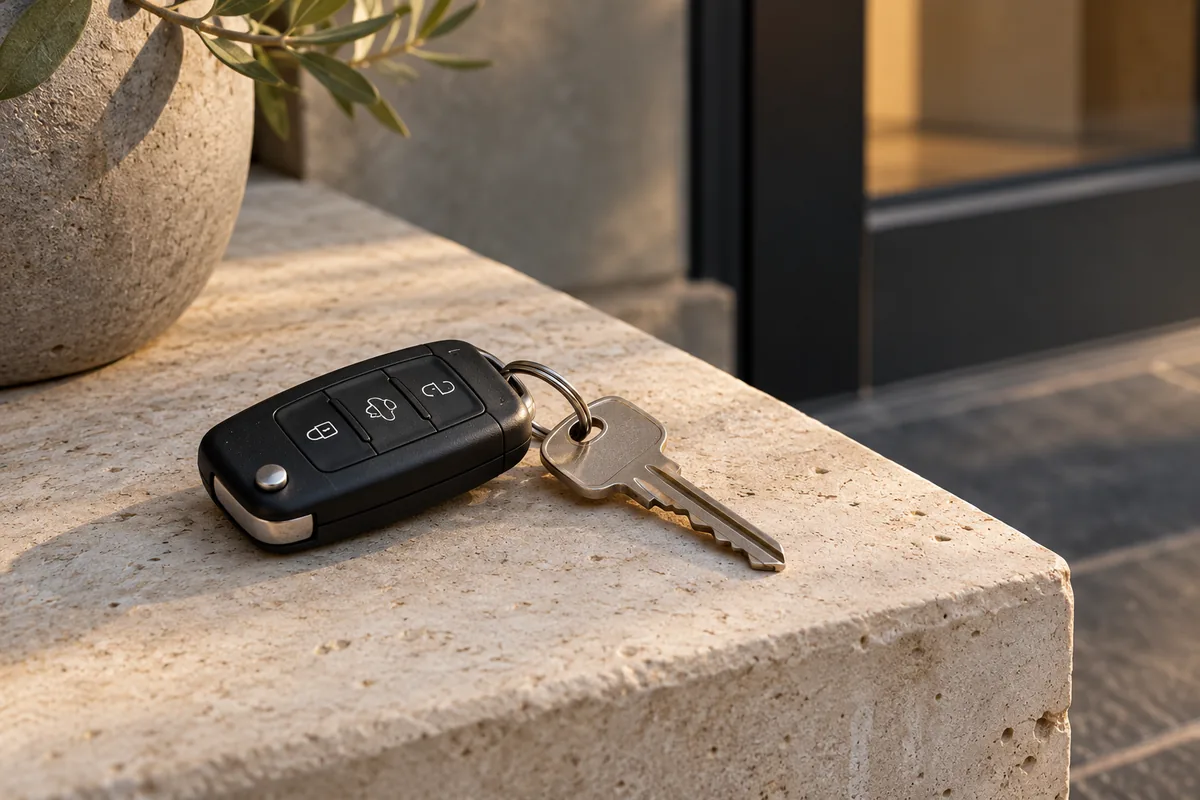
Give each key a purpose
List the private apartment or office door separately from a lobby, storage room or parking entrance. Note which key belongs to each, without writing down sensitive key codes or circulating close photographs. If one key serves several doors, make that connection part of the conversation. A fob or access card is a different item and may be managed by the building.
Count the copies being handed over and identify gaps in the account. The useful question is whether the current arrangement suits the people responsible now. For suitable private keyed hardware, a rekey discussion can address a change in keyholders without assuming all hardware must be replaced.
Separate approval from possession
Receiving a key does not answer every question about permission to change the lock. A tenant, owner, business manager and building manager can have different roles. Check the relevant property agreement and ask the responsible contact who should approve the specific proposal. This is a way to prepare a request, not an interpretation of your lease.
For a home entrance, state the private door involved. For an office or shop, identify the business contact who can decide. Any shared key arrangement should be raised before work is agreed so its relationship to other entrances can be checked.
Leave a usable record of the result
If key work goes ahead, agree which doors and finished copies are included. Ask how old keys will be affected and whether a separate fault needs attention. Keep the supplied keys distinguishable during the handover, and give them only to the people covered by the property arrangement.
A door that already sticks should be described alongside the key-control question. The repair page explains why changing keyholders and restoring smooth operation can be different goals. Before approving either, review the scope, conditions and amount rather than relying on a general description such as “sort the locks.”