
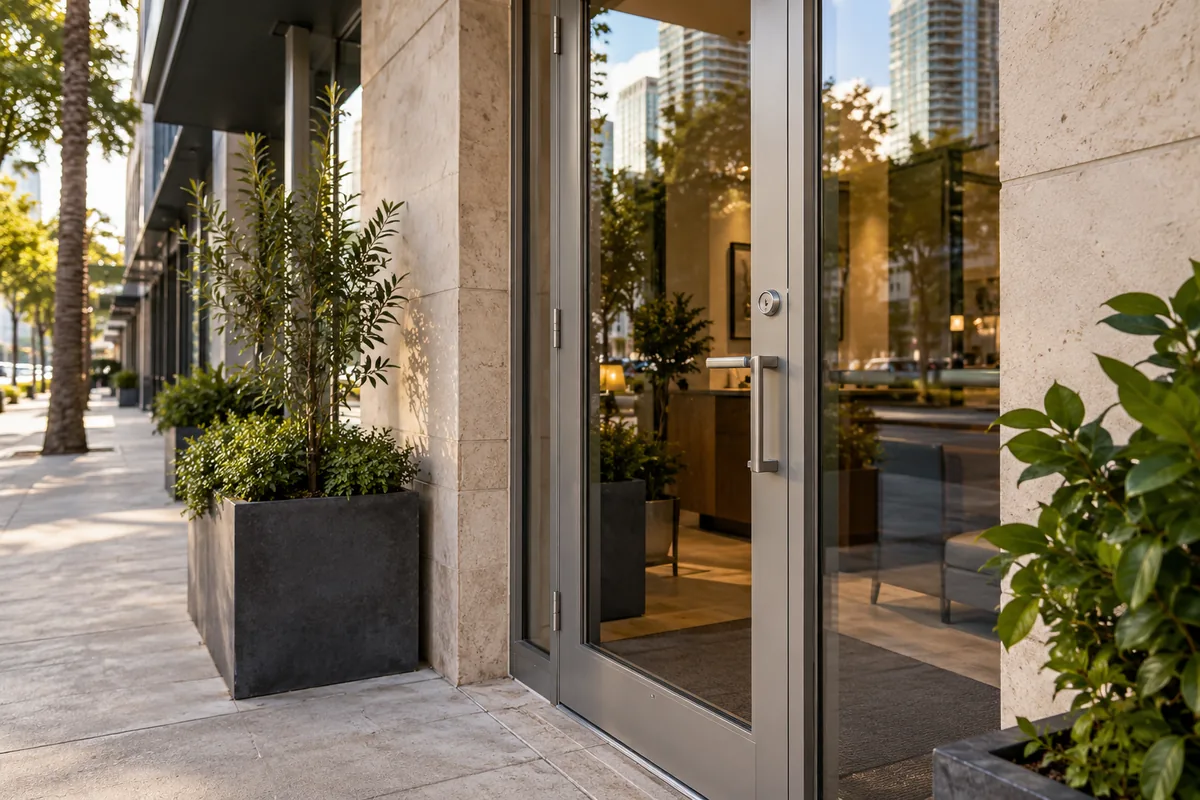
Which part of the premises?
A street-facing shop door, an internal office and a building’s shared entrance belong in separate descriptions. Give the suite or business name as well as the street number. Explain which entrance is normally used to reach the affected door.
If a property manager controls that part of the building, arrange the right contact before requesting changes to it.
Describe the working-day problem
Does the key turn without releasing the door, does a handle feel loose, or does the door fail to latch at closing time? Say what staff have already observed without repeatedly forcing the mechanism.
For a physical fault, our lock repair page explains useful descriptions. Mention when an authorized person can attend and any permitted entrance arrangements.
Review the keys that are still out
A staffing change can raise a key question even when the lock feels normal. Count the doors to be considered and explain how copies are currently used.
A rekey assessment can address suitable keyed hardware, but a shared master-key arrangement needs the responsible contact involved. Electronic credentials and building access systems require their own capability check; a door-key request does not establish that scope.
Agree before the work expands
Specify whether the request concerns entry, a mechanical repair or changing which keys operate the lock. Ask how the door’s condition affects the estimate and what parts or keys are proposed.
Keep any later recommendation separate until the authorized person has reviewed it. Information about the doorway and the decision-maker helps the service conversation more than guessing a component name.