
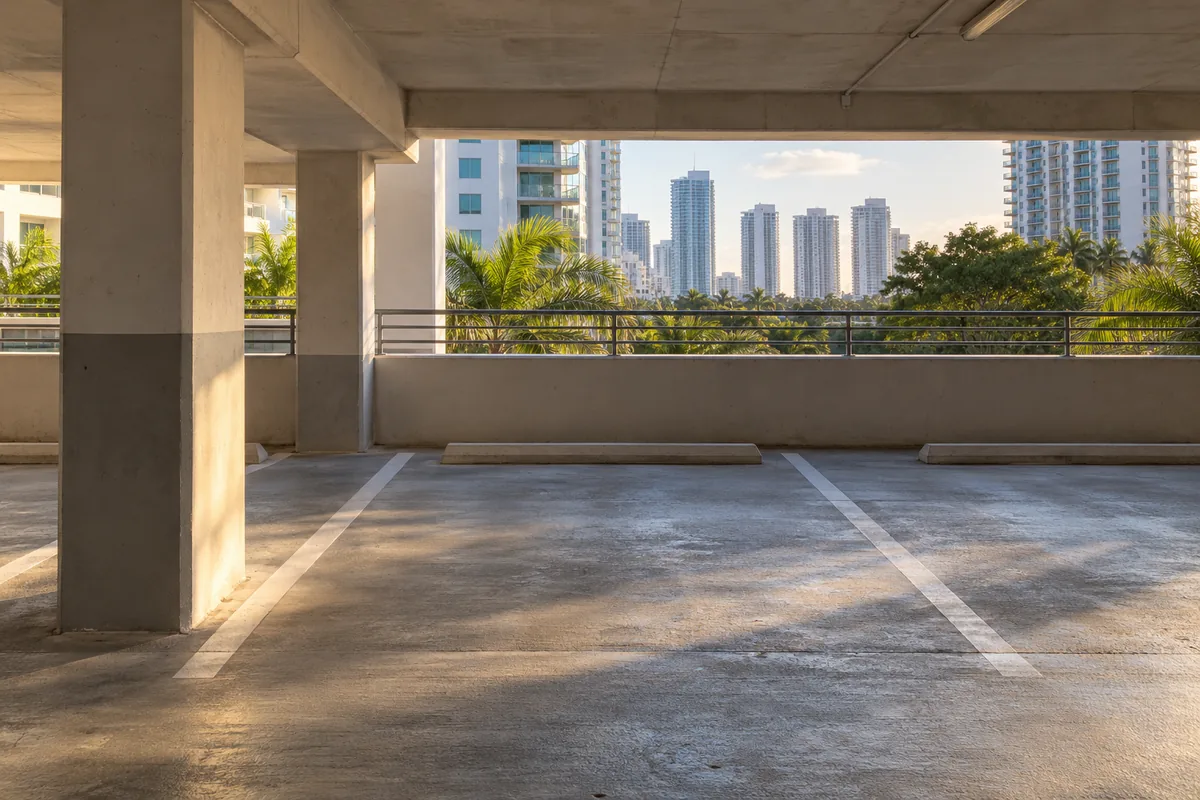
The address and the way in
Start with the facility or building address. Add the vehicle entrance you used if it is different from the pedestrian lobby. A nearby shop, station or waterfront destination may help orient the conversation, but it does not identify a private driveway or the right tower entrance.
Brickell belongs to the Downtown urban setting described by Miami DDA, where waterfront, walking routes and transit feature in planning. A walkable destination and a usable vehicle approach are different details. For a car locksmith request, give the route into the parking facility that you know rather than assuming the front door serves the garage too.
The level and the actual car
Note the level, row, bay number or marker that you remember. Include the vehicle’s make, model, year and a useful description such as color. If you only know a level color, say exactly that. Do not turn a partly remembered sign into a confident space number.
Then describe the key problem: inside the locked car, missing, or with you but failing. If a new key is needed, say whether another working one exists. These details allow the location and the requested capability to be discussed together.
Permission and your waiting point
Private parking may involve a manager, operator or other person who can arrange permitted entry. Explain that arrangement and check what the vehicle owner must authorize. Being able to describe a parking garage does not establish support for repairing its gate or electronic entrance equipment.
Finish the note with a safe meeting point and a way to reach you. That point may be away from the car. Do not wait on a ramp or search between levels just to collect more details. If the vehicle moves, a spare arrives or the meeting arrangement changes, update the request so the earlier note does not remain the only instruction.